
How to Import Wheel Fasteners from China to Brazil: NCM Codes, Taxes, RADAR and Inmetro
From the first RFQ to customs clearance in Santos: what Brazilian importers need to fix with the factory, and what Brazil requires at the border.
By the Shenzhao export team · Wheel fastener manufacturer in Ningbo since 2009 · IATF 16949
To import wheel fasteners from China to Brazil, you need four things in place: a confirmed specification (thread, seat, hex, length, finish), a factory that can prove its quality system, a company registered in Siscomex (RADAR) with a customs broker, and the right NCM code. Lug nuts normally fall under NCM 7318.16.00, and lug bolts and wheel studs under 7318.15.00. As of November 2026, wheel nuts and bolts are not on Inmetro’s compulsory list for automotive parts. Plan on 40–60 days of production after sample approval, plus about 35–45 days of sea freight to Santos. Wheel spacers and adapters follow different rules: they normally classify as wheel parts (NCM 8708.70.90), with different tax rates.
| Step | What you prepare | Who does it | Typical time |
|---|---|---|---|
| 1. Fix the specification | OE number or sample; thread, seat, hex, length, finish, salt-spray level | Importer + factory | 1–2 weeks |
| 2. Qualify the factory | Certificates (IATF 16949), inspection records, samples | Importer | 2–4 weeks |
| 3. Samples and order | Sample approval, MOQ per specification, packaging and labels | Factory + importer | Samples first, then 40–60 days production |
| 4. Brazilian paperwork | RADAR (Siscomex), NCM code, tax estimate, licence check | Importer + customs broker | Before the first shipment |
| 5. Shipping | FCL or LCL, mixed sizes in one container, invoice, packing list, B/L | Factory + forwarder | About 35–45 days Ningbo–Santos |
| 6. Customs clearance | Import declaration (DI or Duimp), tax payment, release | Customs broker | Depends on the inspection channel |
Times are typical for a first order; repeat orders skip steps 1 and 2.
01Fix the Specification Before You Ask for a Price
Most problems with imported wheel fasteners start with an incomplete specification, not at customs. Before you send an RFQ to any factory, lock down for each part:
- ThreadSize and pitch, for example M12×1.5
- Seat60° cone, ball (R12 / R13 / R14) or flat
- HexAcross flats, for example 19 or 21 mm
- LengthOverall, plus thread length for bolts
- FinishCoating, color and salt-spray hours
Fastener type: lug nut, lug bolt or wheel stud. The car decides this, not the buyer; see Lug Nuts or Lug Bolts? How to Identify and Specify the Right Wheel Fastener.
Thread: for example M12×1.5 or M14×1.5. Brazil’s car parc mixes European, Asian and American brands, so expect several thread sizes in one order.
Seat: 60° cone, ball (R12 / R13 / R14) or flat with washer. The seat must match the wheel.
Hex size and length, and for bolts the thread length.
Finish and corrosion level: zinc, chrome, black zinc, zinc-nickel, Dacromet / Geomet and others. Humid and coastal regions are hard on plating, so state the neutral salt-spray hours you need. See Lug Nut Plating and Surface Finishes.
OE number or a physical sample for every reference. An OE number removes most guesswork.
For trucks and buses, add the wheel system (centre-guided or stud-piloted) and whether you need hot-dip galvanized nuts. See Truck Fasteners.
For wheel spacers and adapters the specification is different: the bolt pattern on the hub side and on the wheel side, the centre bore, the thickness and the stud thread. See Wheel Spacers and Adapters: Different Rules.
02Qualify the Factory
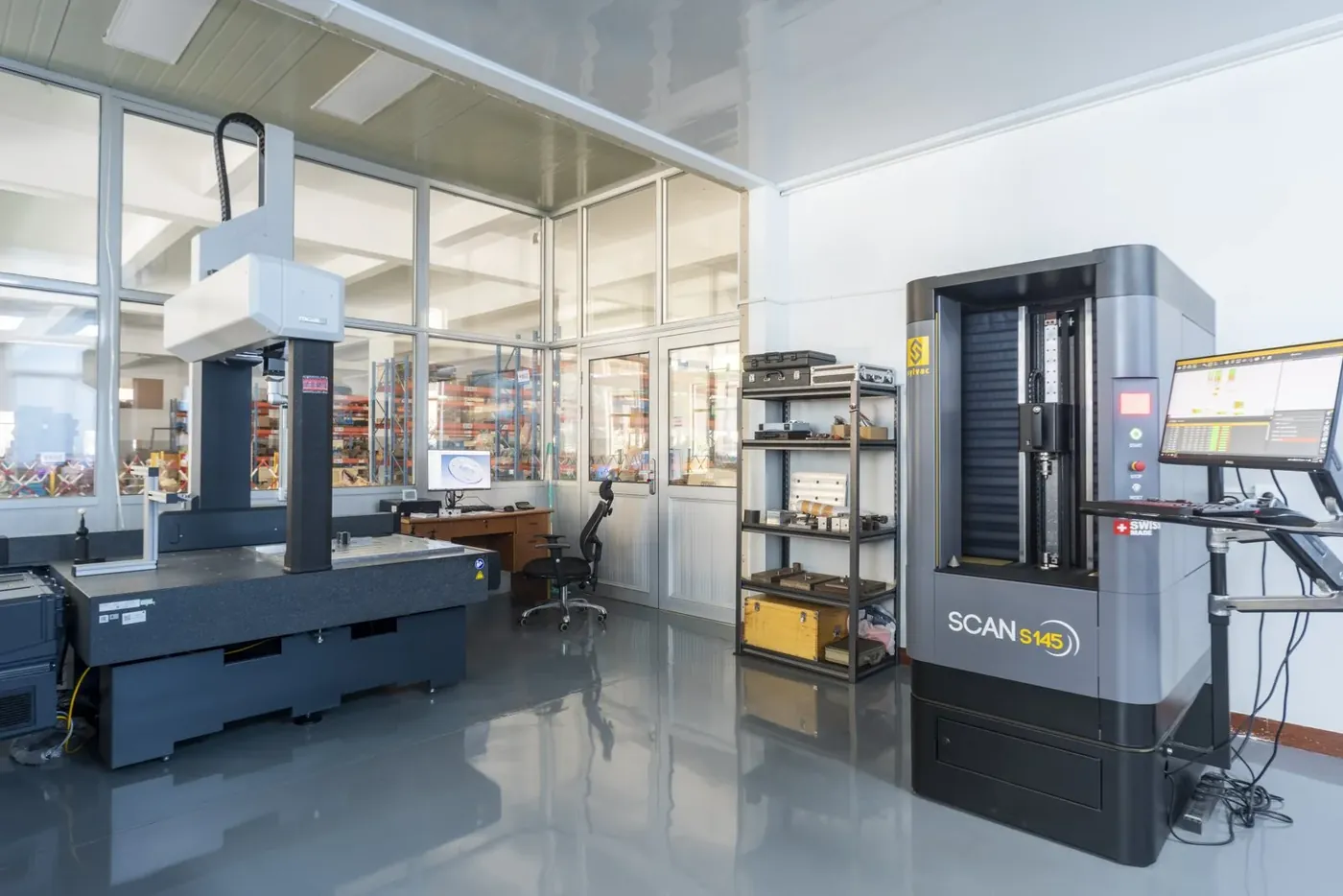
A wheel fastener is a safety part: if it fails, the wheel comes off. Ask every supplier for:
- IATF 16949 certificate (the automotive quality standard), and check that the scope and the company name match the exporter on your invoice.
- What is made in house and what is outsourced. Many factories outsource heat treatment and plating. That is normal, but you should know it, and know how the parts are checked when they come back.
- Inspection records per batch: thread gauges (go / no-go), dimensions, appearance, and salt-spray results for plated parts.
- Export experience: whether the factory exports under its own name and can prepare correct commercial invoices and packing lists for Brazil.
Our full checklist is in How to Choose a Wheel Fastener Manufacturer in China.
03Samples, MOQ and Lead Time
Expect this sequence: drawing or OE number → samples → your fitment test → order → first-article approval → production. Typical figures, using ours at Shenzhao as an example:
- MOQ: 5,000 pieces per specification for car lug nuts and bolts; 10,000 pieces per size for truck nuts; 100 pieces per specification for wheel spacers and adapters. Different specifications can share one container.
- Lead time: 40–60 days after sample approval. Parts are made to order.
- Quality per batch: thread, dimensions and appearance; neutral salt-spray testing for plated parts (for example zinc 96 h+, zinc-nickel 500–3,000 h); first-article check at every changeover.
Order your first container as a mix of your fastest-moving references rather than a full container of one part. It spreads risk and lets you test sell-through.
04Brazilian Import Requirements
This section summarises the rules as of November 2026. Brazilian rules change often, so confirm every point with your customs broker (despachante aduaneiro) before the first shipment. Official links are listed under Official Sources.
RADAR (Siscomex Registration)
A Brazilian company must be registered (“habilitada”) in Siscomex to import; the registration is known as RADAR. Receita Federal’s Instrução Normativa RFB nº 1.984/2020 sets three types:
Listed public companies, public companies and mixed-capital companies
No limitEstimated financial capacity up to US$ 150,000
US$ 50,000 or US$ 150,000 per six monthsEstimated financial capacity above US$ 150,000
No limitIf you plan several containers a year, check that your RADAR type covers the value.
NCM Code
Brazil uses the Mercosur Common Nomenclature (NCM): eight digits based on the Harmonized System. Wheel fasteners normally classify as:
| Product | Usual NCM | Description |
|---|---|---|
| Lug nuts, truck wheel nuts | 7318.16.00 | Porcas (nuts) |
| Lug bolts, wheel studs | 7318.15.00 | Outros parafusos e pinos ou pernos, mesmo com as porcas e arruelas |
| Wheel lock sets | Case by case | Depends on what is in the set |
| Wheel spacers and adapters | 8708.70.90 | Rodas, suas partes e acessórios – outros (see section 05) |
Why heading 7318 and not 8708 (motor vehicle parts)? Under the Harmonized System, screws, bolts and nuts are “parts of general use” (Note 2 to Section XV), and Note 2 to Section XVII keeps parts of general use out of the vehicle-parts headings. The classification decides your tax rates, so agree it with your broker in writing.
Import Taxes
| Tax | What it is | NCM 7318.15 / 7318.16 (Nov 2026) |
|---|---|---|
| II (Imposto de Importação) | Import duty, based on the Mercosur Common External Tariff (TEC) with Brazilian adjustments | 16% |
| IPI | Federal tax on industrial products | 6.5%; set to fall to 0% for most goods from 2027 under the tax reform |
| PIS-Importação / COFINS-Importação | Federal contributions on imports | 2.10% / 9.65% (general rate); replaced by CBS from 2027 |
| ICMS | State tax on goods, set by each state | Varies by state; auto parts are often under ICMS tax substitution (ICMS-ST) |
Rates as published for November 2026 (TEC under Gecex Resolutions 272/2021 and 391/2022, TIPI, Law 10.865/2004). Check your exact case in the Siscomex simulator.
Taxes are calculated on the customs value (goods plus freight plus insurance), and several are calculated on top of each other, so the total is well above the simple sum of the rates.
Tax reform (2026–2033). Brazil is replacing PIS, COFINS, IPI, ICMS and ISS with two new taxes, CBS and IBS, under Complementary Law 214/2025. 2026 is a test year with small CBS and IBS rates; from 2027 CBS replaces PIS and COFINS; ICMS is phased out between 2029 and 2033. Ask your broker how this changes your landed cost each year.
Inmetro
Inmetro’s compulsory certification for aftermarket automotive components (Portaria Inmetro nº 145/2022) covers shock absorbers, fuel pumps, horns, pistons, piston rings, bearings, lamps, batteries, brake friction materials and steering parts. Wheel nuts, wheel bolts and wheel studs are not on that list as of November 2026; wheels themselves have their own compulsory certification. Inmetro opened a public consultation to revise Portaria 145/2022 in April 2026 (Portaria Inmetro nº 210/2026), so check the current list before each new product line.
Wheels themselves have their own compulsory certification.
Import Licence and Declaration
For new goods under 7318.15.00 and 7318.16.00, Siscomex data shows no general licence (LI / LPCO) requirement for wheel fasteners; licences apply only in specific cases, such as used goods. Brazil is also moving import declarations from the old DI to the new Duimp, operation type by operation type, and Siscomex publishes the schedule. Your broker files whichever one applies.
05Wheel Spacers and Adapters: Different Rules
Wheel spacers move the wheel outwards. Wheel adapters (PCD adapters) also change the bolt pattern, for example from 5×100 to 5×112, so a wheel can fit a hub it was not made for. Both bolt to the hub and carry their own studs. In Brazil they differ from lug nuts and bolts in three ways.
- Hub-side bolt patternThe car’s PCD, for example 5×100
- Wheel-side bolt patternThe wheel’s PCD, for example 5×112
- Centre boreHub-centric fit to the car and to the wheel
- ThicknessHow far the wheel moves out, for example 15–50 mm
- StudsThread size and grade 10.9
Different NCM Code and Taxes
Spacers and adapters are not general-use fasteners but parts of wheels, so they normally classify under NCM 8708.70.90 (wheels, their parts and accessories: others), not 7318. That changes every federal tax:
| Tax | Lug nuts, bolts, studs (7318) | Spacers and adapters (8708.70.90) |
|---|---|---|
| II (import duty) | 16% | 18% |
| IPI | 6.5% | 3.25% |
| PIS-Importação / COFINS-Importação | 2.10% / 9.65% | 3.12% / 14.37% (auto-parts rates) |
Rates as published for November 2026. Heading 87.08 is on the auto-parts list of Law 10.485/2002, which triggers the higher PIS/COFINS rates under Law 10.865/2004 (art. 8, §9). From 2027, IPI falls to 0% for most goods and CBS replaces PIS and COFINS. Check your exact case in the Siscomex simulator.
Inmetro Check at Import
Inmetro certifies wheels: steel and aluminium-alloy wheels for cars and rims for trucks and buses (Portaria Inmetro nº 501/2021). Spacers and adapters are not named in that regulation. But they share NCM 8708.70.90 with wheels, and the wheel items under that code need an Inmetro import licence. Your broker must declare the goods as spacers or adapters, not wheels, in the Duimp. Confirm the treatment before the first shipment.
Road Rules for the End User
Brazilian traffic rules do not name spacers. But CONTRAN Resolution nº 916/2022 (art. 10) prohibits wheel and tyre sets that extend beyond the fenders or touch the body or suspension, and changes to a registered vehicle can need prior authorisation and a vehicle safety certificate (CSV). Ask your customers to check fitment and the local rules before installing.
Spacers and Adapters from Shenzhao
- Forged aluminium, 15–50 mm, hub-centric, with grade 10.9 studs.
- Adapters made to the bolt patterns on both sides, for example 5×100 to 5×112.
- Anodized in any colour anodizing can produce; your marking and packaging.
- MOQ 100 pieces per specification; 40–60 days after sample approval.
See Wheel Spacers and Adapters.
06Packaging and Labelling
- Made to your specification. Bulk cartons for distributors and workshops, or your own retail packaging: boxes, blisters, kits with a key for wheel locks, your brand and part numbers.
- Portuguese on consumer packs. Brazil’s Consumer Defence Code (Lei nº 8.078/1990, art. 31) requires product information for consumers in Portuguese. Send us your Portuguese label text and we print it on the pack.
- Wooden packaging. Solid wood packaging entering Brazil must be treated and marked to the international ISPM 15 standard. Our pallets are either plywood, which is processed wood, or treated solid wood with the ISPM 15 mark.
07Shipping to Brazil
- FCL or LCL. Steel fasteners are heavy, so container weight, not volume, is usually the limit. For a first order, LCL or a mixed 20-ft container is common.
- Mixed sizes in one container. Different thread sizes, seats and finishes can be consolidated, as long as each specification meets its MOQ.
- Transit time. About 35–45 days by sea from Ningbo to Santos.
- Ports. Santos handles the largest share of container traffic; Paranaguá, Itajaí / Navegantes and others are options depending on your state.
- Documents from the factory: commercial invoice and packing list with NCM codes, quantities, net and gross weights, and the bill of lading. Send the factory your broker’s checklist before shipment.
- Incoterms. FOB Ningbo or Shanghai is most common; CFR or CIF Santos is possible.
08Questions Buyers Ask
What is the NCM code for wheel nuts imported into Brazil?
Lug nuts normally classify under NCM 7318.16.00 (nuts), and lug bolts and wheel studs under 7318.15.00. Confirm the classification with your customs broker, because it decides your tax rates.
What is the NCM code for wheel spacers and adapters in Brazil?
They normally classify as wheel parts under NCM 8708.70.90, not 7318, so the import duty, IPI and PIS/COFINS rates differ from lug nuts. In November 2026 the import duty is 18%. Confirm the classification with your customs broker.
Do wheel nuts need Inmetro certification in Brazil?
As of November 2026, wheel nuts, bolts and studs are not on Inmetro’s compulsory list for aftermarket automotive components (Portaria Inmetro 145/2022). Wheels themselves are certified separately. The list is under review, so check before each new product line.
What import taxes apply to wheel fasteners in Brazil?
Import duty (II), IPI, PIS-Importação, COFINS-Importação and the state ICMS. In November 2026 the import duty for NCM 7318.15 and 7318.16 is 16%. Use the Siscomex simulator for your exact landed cost, and note that the 2026–2033 tax reform is changing these taxes.
Do I need RADAR to import from China?
Yes. A company must be registered in Siscomex (RADAR) before it can import. The limitada type caps imports at US$ 50,000 or US$ 150,000 per six months; ilimitada has no cap.
What is the minimum order for wheel nuts from a Chinese factory?
It varies by factory. At Shenzhao it is 5,000 pieces per specification for car lug nuts and bolts and 10,000 per size for truck nuts, and different specifications can share one container.
How long does it take to import wheel fasteners from China to Brazil?
Allow 40–60 days of production after sample approval, about 35–45 days of sea freight from Ningbo to Santos, and time for customs clearance. Samples and RADAR should be done before the order.
09Official Sources
- Receita Federal: Manual de Habilitação no Siscomex (IN RFB nº 1.984/2020)
- Receita Federal: Modalidades Limitada e Ilimitada
- Siscomex: Portal of Brazilian foreign trade (tax and administrative treatment)
- Siscomex: DI to Duimp switch-over schedule
- World Customs Organization: HS Nomenclature 2022 (Section XV and XVII notes)
- Inmetro: Portaria nº 145, de 28 de março de 2022 (componentes automotivos) and Portaria nº 210/2026 (public consultation)
- Lei Complementar nº 214/2025 (IBS and CBS)
- Lei nº 10.865/2004 (PIS/COFINS-Importação)
- Inmetro: Portaria nº 501, de 20 de dezembro de 2021 (rodas automotivas)
- CONTRAN: Resolução nº 916, de 28 de março de 2022
- Lei nº 10.485/2002 (autopeças, Anexo I)
- Lei nº 8.078/1990, Código de Defesa do Consumidor (art. 31)
This guide is general information, not legal or tax advice. Brazilian import rules and rates change; confirm with your customs broker and the official sources above.